

AVKS - UPSC CAPF AC CLASSES
Introduction:
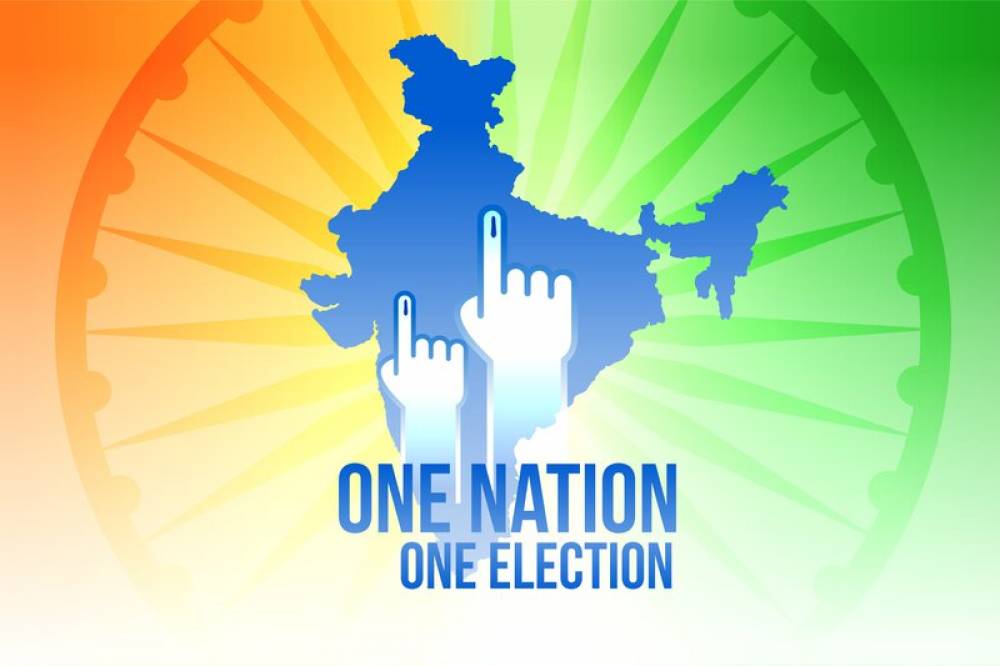
The idea of "One Nation, One Election" has been a subject of intense debate and discussion in the Indian political landscape. Advocates argue that synchronizing the Lok Sabha (national) and state legislative assembly elections could have several advantages, while critics express concerns about its feasibility and potential drawbacks. In this argument, we will examine both the pros and cons of the "One Nation, One Election" concept, aiming to provide a comprehensive view of this proposed electoral reform.
Points in Favor:
Cost Efficiency: Conducting numerous elections at different times incurs significant expenses for the government. Simultaneous elections would help reduce the financial burden, making more funds available for essential public services like healthcare, education, and infrastructure development.
Reduced Disruption: Frequent elections can disrupt governance as elected representatives and government officials often shift their focus to electioneering. Synchronized elections would allow leaders to concentrate on policy implementation between election cycles, potentially leading to better governance.
Enhanced Voter Turnout: State assembly elections typically suffer from lower voter turnout compared to national elections. Combining the two would likely increase participation in state elections, providing a more accurate reflection of the people's will and strengthening democracy.
Political Stability: Frequent elections can lead to political instability, especially when coalition governments are common at the state level. Simultaneous elections might result in more stable governments, promoting long-term planning and decision-making.
Streamlined Administration: Synchronizing elections would streamline the logistical and administrative processes, making it easier to implement security measures and monitor voting. This could reduce the chances of electoral malpractices and enhance the credibility of the electoral process.
Points Against:
Feasibility Challenges: India's vast and diverse electorate presents logistical and operational challenges in conducting simultaneous elections. Coordinating such a massive undertaking across the nation's varied regions and political landscapes could prove to be extremely complex.
Erosion of Regional Autonomy: Critics argue that simultaneous elections could undermine the principle of federalism and regional autonomy by centralizing power at the national level. State issues and regional identities might get overshadowed by national-level politics.
Dominance of National Issues: Synchronized elections might lead to state-level issues being subsumed by national ones, potentially reducing the specificity and relevance of state elections. This could limit voters' ability to address regional concerns effectively.
Strain on Political Parties: Parties would need to align their strategies and resources for simultaneous elections. Smaller parties with limited resources might find it challenging to compete on both national and state fronts, potentially stifling political diversity.
Potential for Polarization: Holding elections concurrently could lead to an extended election season with intensified political rhetoric, contributing to polarization and making it harder for voters to make informed decisions.
Conclusion:
The concept of "One Nation, One Election" presents a compelling case for cost efficiency, political stability, and improved voter turnout. However, it also faces challenges related to feasibility, regional autonomy, and the potential for political polarization. Ultimately, the success of this electoral reform will depend on careful planning, robust institutional support, and a nuanced approach that addresses both its advantages and disadvantages while preserving the integrity of Indian democracy.
Discover Excellence at AVKS ACADEMY
Visit our website : AVKS Academy One of the Leading Insitute for UPSC CAPF Exam Preparation in India.
or contact us today to embark on your journey to greatness. Your success story begins here!"
Contact : 7093777494 , 7404460797
TELEGRAM : https://t.me/avksacademycapfac
INSTAGRAM : https://instagram.com/avkscapf?igshid=MzRlODBiNWFlZA==